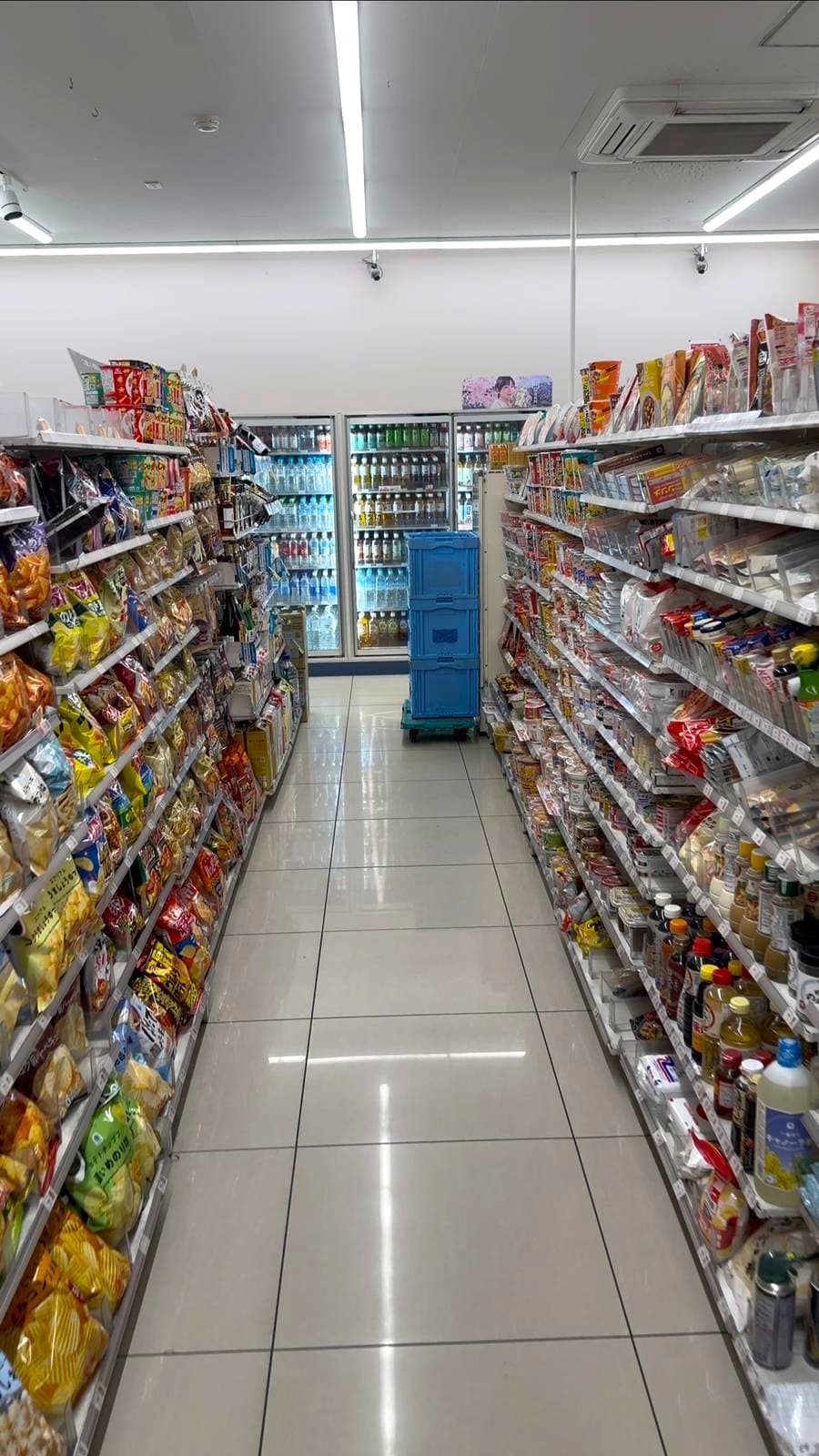
Les konbini japonais (convenience stores) sont réputés pour leur qualité. Des chaînes comme 7-Eleven, FamilyMart et Lawson proposent de tout : bento frais, salades, sandwichs, pâtes, poulet frit et desserts.
Pour beaucoup d'étrangers vivant au Japon, les repas de konbini font partie du quotidien.
Mais sont-ils vraiment sains ? Vraiment ?
La réponse dépend de ce que vous choisissez et de la fréquence à laquelle vous en mangez.
Pourquoi la nourriture de konbini semble plus saine que le fast-food
Comparés à beaucoup de fast-foods occidentaux, les repas de konbini japonais paraissent souvent équilibrés et relativement frais.
Options courantes :
- bento de riz avec poisson grillé ou poulet
- salades de légumes à la sauce sésame
- onigiri (boules de riz) au thon, saumon ou prune salée
- soba ou udon froids
Les portions ont aussi tendance à être plus petites et mieux contrôlées qu'un repas de fast-food typique.
De nombreux produits affichent clairement un tableau 栄養成分表示 (eiyō seibun hyōji), le tableau des valeurs nutritionnelles :
| Japonais | Lecture | Signification |
|---|---|---|
| エネルギー | enerugī | Calories |
| たんぱく質 | tanpakushitsu | Protéines |
| 脂質 | shishitsu | Lipides |
| 炭水化物 | tansuikabutsu | Glucides |
| 食塩相当量 | shokuen sōtōryō | Équivalent en sel |
Cette transparence aide les consommateurs à faire des choix éclairés.
Les principaux points de vigilance nutritionnels
Même si les repas de konbini paraissent équilibrés, plusieurs éléments méritent votre attention.
Un sel très présent
La teneur en sel est souvent bien plus élevée qu'attendu.
Exemples :
- ramen ou soupes de nouilles
- curry-riz
- bento de poulet frit
- pâtes en sauce
Un seul repas peut contenir la moitié, voire plus, de l'apport quotidien recommandé en sodium.
Regardez la ligne 食塩相当量 (shokuen sōtōryō) du tableau nutritionnel pour vérifier la quantité de sel.
Des ingrédients transformés
De nombreux repas de konbini reposent sur des composants transformés :
- sauces
- marinades
- mélanges d'assaisonnement
- viandes préparées
Ils contiennent souvent des additifs listés sous 添加物 (tenkabutsu).
Les plus courants :
- 調味料(アミノ酸等) : exhausteurs de goût
- 保存料 : conservateurs
- 増粘剤 : épaississants
- 着色料 : colorants alimentaires
Cela ne signifie pas forcément que l'aliment est dangereux, mais que le repas est plus transformé qu'il n'y paraît.
Du sucre caché
Certains plats préparés japonais contiennent des niveaux de sucre étonnamment élevés, en particulier dans les sauces.
Exemples typiques :
- poulet teriyaki
- plats mijotés (煮物)
- sauces soja sucrées
- sandwichs de konbini
Le sucre apparaît souvent sous les formes :
- 砂糖 (satō) : sucre
- 果糖ぶどう糖液糖 : sirop de glucose-fructose
- 水あめ : sirop d'amidon
Les meilleurs choix en konbini
Si vous dépendez des konbini, de petits choix font une grande différence.
Bons choix
- bento de poisson grillé
- onigiri nature (saumon, kombu, ume)
- œufs durs
- salades de tofu
- soba froids
- accompagnements de légumes
Choix à limiter
- pâtes crémeuses
- fritures
- ramen instantanés
- currys copieux
- pâtisseries et desserts sucrés
Une règle simple : combiner les produits
Plutôt que d'acheter un seul repas copieux, beaucoup de gens composent un ensemble équilibré à partir de petits produits.
Exemple :
- un onigiri
- une salade
- des œufs durs ou du poulet grillé
- une soupe miso
Cette approche donne généralement une meilleure nutrition et moins de calories.
La vraie réponse
La nourriture de konbini japonaise n'est pas automatiquement saine, mais elle est souvent plus saine qu'un fast-food classique.
Elle se situe quelque part entre :
cuisine maison fraîche → repas de konbini → fast-food.
Consommés occasionnellement et choisis avec soin, les repas de konbini peuvent s'intégrer à une alimentation équilibrée.
La difficulté, c'est que les listes d'ingrédients et les additifs sont difficiles à lire si vous ne comprenez pas le japonais.
FAQ
Les repas de konbini sont-ils plus sains que le fast-food ?
En général, oui. Les repas de konbini ont tendance à proposer des portions plus petites et mieux contrôlées, avec un étiquetage nutritionnel plus clair que le fast-food classique, mais beaucoup restent riches en sodium et contiennent des additifs transformés.
Quel est l'aliment le plus sain dans un konbini japonais ?
Le bento de poisson grillé, l'onigiri nature (saumon, kombu, ume), les œufs durs, les salades de tofu et les soba froids figurent parmi les meilleurs choix. Les pâtes crémeuses, les fritures et les ramen instantanés sont à limiter.
La nourriture de konbini est-elle riche en sodium ?
Oui. Le ramen, le curry-riz, le bento de poulet frit et les pâtes en sauce peuvent chacun contenir la moitié, voire plus, de l'apport quotidien recommandé en sodium. Vérifiez la ligne 食塩相当量 (shokuen sōtōryō) de l'étiquette nutritionnelle pour connaître la quantité de sel.
Peut-on manger au konbini tous les jours ?
C'est possible en choisissant avec soin et en combinant de petits produits, comme un onigiri, une salade et des œufs durs ou du poulet grillé, plutôt qu'un seul repas transformé copieux. Il est déconseillé de s'appuyer quotidiennement sur des options frites ou crémeuses.
Comprendre la nourriture de konbini instantanément
Lire les listes d'ingrédients et les noms d'additifs japonais prend du temps si vous ne comprenez pas la langue.
Pour comprendre un produit instantanément, vous pouvez scanner l'étiquette avec Okaasan.
Il suffit de prendre une photo et l'app affiche :
- la traduction complète des ingrédients
- l'analyse des additifs avec niveau de risque
- la détection des allergènes
- les valeurs nutritionnelles
- les indicateurs alimentaires (vegan, halal, sans gluten)
Parce que savoir ce que contient votre nourriture est la première étape pour mieux manger au Japon.